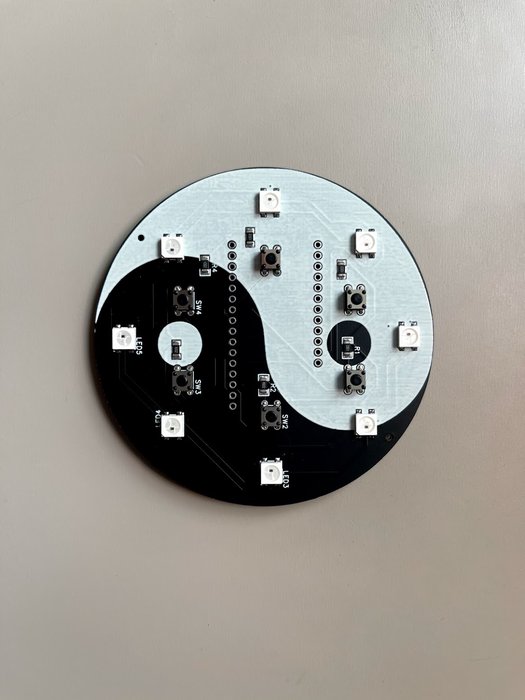
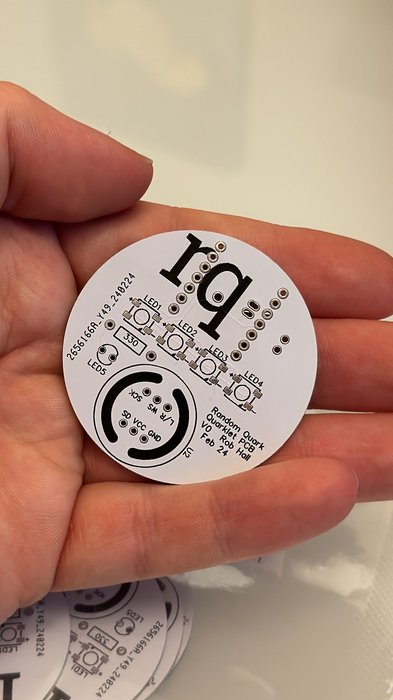
PCB Design
Tidal Frequencies translates live oceanographic data from NOAA monitoring buoys into a continuously evolving audiovisual composition. Wave height, period, water temperature, and current direction are mapped to synthesis parameters, creating a sonic portrait of the ocean that shifts with the real tides.
Commissioned for a science communication event at the National Maritime Museum, the piece runs as a floor-projected WebGL visualisation paired with a quadraphonic sound system built in SuperCollider. Data is pulled every six minutes from the NOAA API and interpolated smoothly to avoid audible jumps.
The visual layer renders the ocean surface as a dynamic mesh whose topology deforms according to the incoming data streams. Warmer currents glow amber; colder readings shift toward deep blue. The result is an abstracted, living map of the Atlantic that visitors can walk across — hearing and feeling the data beneath their feet.